

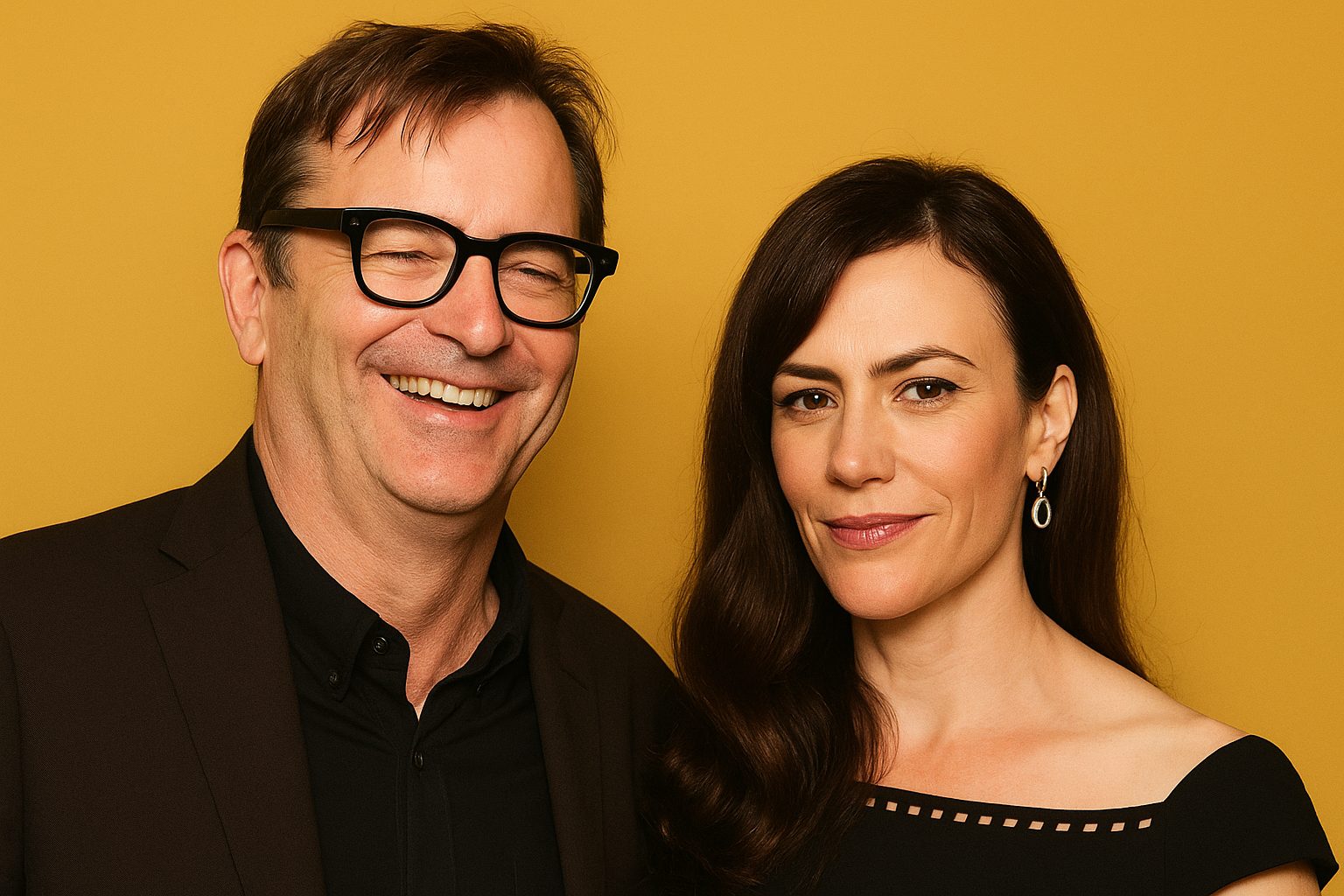
Most people meet the name Paul Ratliff through a search bar. They type a phrase like “Paul Ratliff actor, Maggie Siff’s husband,” and expect a simple profile of a celebrity spouse. What they find instead—once the layers are peeled back—is a much richer, more complex portrait of a man who moved through several lives with quiet conviction. He acted in his early years, shifted into ethnographic research, shaped corporate innovation, and eventually rebuilt himself as a psychotherapist. His path followed curiosity more than ambition, and meaning more than recognition. Each chapter revealed a different facet of what he valued most: understanding people with depth, sincerity, and compassion.
That journey intertwined with the life of actress Maggie Siff, one of television’s most respected performers. Their marriage created a partnership grounded not in fame but in intellectual connection, emotional honesty, and shared admiration. And although Ratliff’s life ended far too early, the impact he made—professionally, personally, and relationally—continues to resonate with those who knew him.
Early Foundations: A Mind Drawn to Story and Human Nature
Paul Ratliff’s early life remains intentionally private, but certain truths emerge through his academic history. He attended Wesleyan University, a school known for producing filmmakers, artists, researchers, and creative thinkers. He graduated in 1988 with a Bachelor of Fine Arts centered on film, theatre, and video studies. That program gave him more than technical skill. It trained him to see narrative as a mirror of human complexity. Characters became psychological puzzles. Scenes became emotional studies. Storytelling became a way to understand how people respond, adapt, and reveal themselves.
Wesleyan’s campus culture encourages exploration. Ratliff thrived in that environment because he already carried a deep interest in how people think and act. This interest shaped much of his adult life. It also gave him the confidence to step into acting, research, business innovation, and eventually therapy. Each career shift built on the same foundation: the belief that every human carries a story worth understanding.
A Brief Period in Acting: Studying Humanity Through Performance
After graduation, Ratliff spent time working as an actor. Acting appealed to his fascination with motives and emotional truth. Even though he did not pursue a traditional Hollywood trajectory, the profession gave him valuable insight into human behavior. Performance requires attention to detail. Every gesture, pause, or inflection carries meaning. An actor learns to read people, even when they try to hide their inner life.
Some entertainment databases list a Paul Ratliff in productions such as General Hospital and To Be or Not to Be. While the exact connection remains unconfirmed, many biographical accounts claim that Maggie Siff’s husband spent a portion of his early life in acting. The specifics matter less than the influence this period had on him. Acting sharpened his observational skills. It helped him understand emotional dynamics. It taught him how to listen—not only to words but to silence, tension, and subtext. That sensitivity later became one of his greatest professional assets.
From Stage to Research: The Birth of an “Understander”
In the mid-1990s, Ratliff made a decisive shift into ethnographic research. He joined E-Lab, a company famous for using anthropology to study consumer behavior. His title there—“Understander”—captured the essence of his role. He observed real people in their natural environments, watching how they solved problems, interacted with tools, and responded to challenges. Instead of relying on assumptions, he allowed behavior to reveal the truth.
Ethnographic research demands patience and empathy. Researchers must blend into everyday settings without disrupting them. Ratliff excelled at this because he did not approach research as data collection. He approached it as a chance to witness real human experience. He watched how individuals behaved when no one expected a performance. That subtle distinction set him apart. Colleagues often described him as someone who noticed what others missed.
The work also marked the beginning of his interest in systems—how people, environments, and technologies shape one another. By understanding those relationships, he could help companies design products that felt natural, intuitive, and human-centered.
Professional Reinvention: A Leader in Design Strategy and Innovation
After leaving E-Lab, Ratliff entered the corporate innovation world. He joined Sapient, a company that blended strategy, technology, and research to solve complex design problems. At Sapient, he worked within a think tank that used ethnographic insight to guide product development. He became known for his ability to translate human behavior into actionable ideas. Instead of telling companies what people said they wanted, he showed them what people actually did.
Colleagues admired his intuitive understanding of how individuals use machines, tools, and digital interfaces. He could walk into a room, observe a single interaction, and identify friction points others had overlooked. That talent led him to consulting roles where he guided major corporations in redesigning customer experiences. His projects spanned industries, from healthcare and beauty to consumer electronics and household goods.
Despite working in high-level innovation, he never treated his work as a race toward efficiency or profit. He approached design strategy with the same curiosity he once brought to acting. Every decision had a human consequence. Every new product needed to honor real behaviors rather than idealized ones. This ethic shaped his reputation as a strategist who grounded innovation in empathy.
A Profound Transformation: Choosing the Path of Psychotherapy
Even with a successful career in research and design, Ratliff felt drawn to something more intimate. The corporate world allowed him to explore human behavior at scale, but he wanted to help people on a personal level. He wanted to sit with individuals and families, understand their struggles, and guide them toward healing. That desire pushed him into a bold reinvention.
Around 2015, he returned to graduate school at Pacifica Graduate Institute to study counseling psychology. He pursued his master’s degree with sincerity and focus, completing it in 2018. The curriculum at Pacifica emphasizes depth psychology and narrative understanding, themes that perfectly complemented his earlier work. Therapy became the final evolution of his lifelong interest in people.
After graduation, Ratliff practiced as a marriage and family therapist at the Erika Malm Collective in New York. His approach blended narrative therapy, observational insight, systems thinking, and emotional attunement. Clients described him as someone who listened without judgment and guided them toward clarity. His work helped individuals navigate anxiety, trauma, conflict, identity, and relational patterns. The qualities that shaped his earlier careers—curiosity, empathy, and patience—became the heart of his therapeutic practice.
A Love Story Built Through Words: Meeting Maggie Siff
Ratliff’s personal life became widely known through his marriage to Maggie Siff, though their relationship began far away from cameras. Their early connection grew through email conversations. He wrote to her with honesty, wit, and emotional intelligence. She responded with equal depth. Their correspondence became the foundation of their relationship, revealing shared values and complementary temperaments.
When they eventually married in October 2012, the ceremony reflected who they were as individuals. It was intimate, thoughtful, and grounded in genuine affection rather than spectacle. Siff later shared that Ratliff surprised her on their first anniversary by printing and binding their email exchanges into a book. The gesture captured the heart of their relationship: a marriage built on communication, reflection, and mutual respect.
In April 2014, they welcomed their daughter, Lucy. Parenthood strengthened their bond further. Friends and colleagues have often described their household as warm, intellectual, and loving. Ratliff cherished fatherhood, and Siff expressed absolute confidence in his ability to guide and nurture their child.
Although Siff lived a public life, the couple maintained a private, grounded home. They appeared together only at select industry events. Ratliff preferred to support Siff quietly, standing beside her with pride but never seeking attention for himself.
Facing Illness with Courage and Privacy
Later in his life, Ratliff received a diagnosis that changed everything. He developed brain cancer, a disease he battled with strength and privacy. He and his family chose not to share public updates, preferring to navigate the experience with dignity and space. His passing in December 2021 marked the end of a life shaped by curiosity, evolution, and profound humanity.
The news emerged gradually as biographical profiles updated his information. Siff has spoken sparingly about his death, a choice that reflects the couple’s lifelong approach to privacy. Those who knew Ratliff personally remember him as someone who gave his full attention to others. Even during illness, he remained thoughtful, reflective, and deeply connected to his family.
Untangling the Confusion Around His Name
Ratliff’s public identity suffers from an unusual complication: several other public figures share his name. One is a former Major League Baseball catcher. Another is an actor with credits from the early 1980s. This overlap has created confusion, especially online. Some articles blend details from different individuals without realizing it. Maggie Siff’s husband was not the baseball player, and the acting credits commonly attributed to him may or may not be his. Because he kept his early career private, the connection remains open to interpretation.
Despite the overlap, his identity stands apart. He was a therapist, researcher, strategist, actor, father, and husband. His life did not depend on public validation. This distinction is important because it reflects how he chose to live: grounded in purpose, not visibility.
What Paul Ratliff Leaves Behind
Ratliff’s legacy rests not in fame but in meaning. He left a mark on every field he entered. Researchers remember his ability to see patterns invisible to others. Colleagues in design recall his sharp insights and humane perspective. Clients in therapy speak of a man who listened with patience and offered guidance without pressure.
His greatest legacy lives in his family. He helped build a home defined by communication, emotional intelligence, and love. Siff has described him as a partner whose kindness and intellect shaped her personal and creative life. Their daughter carries forward the memory of a father who valued curiosity, compassion, and integrity.
Ratliff’s life illustrates the power of reinvention. He refused to remain in a single identity. Instead, he allowed his interests to evolve and trusted his instincts enough to follow them. That courage became a defining trait. It allowed him to move from stage to research lab, from corporate boardroom to therapy office. Every shift brought him closer to the kind of work that matched his inner values.
Also Read: Polo G Dead? The Shocking Truth Behind the False Reports
Final Thoughts
When people search for “Paul Ratliff actor, Maggie Siff’s husband,” they often expect a simple biography. What they find—if they read closely—is a portrait of a man devoted to the emotional and intellectual exploration of what it means to be human. His journey crossed disciplines that rarely intersect. His relationships were built on depth, honesty, and communication. His professional life centered on understanding people, not judging them. And his marriage to Maggie Siff became a partnership defined by mutual respect and profound emotional connection.
Ratliff’s story is a reminder that a meaningful life does not require fame. It requires curiosity, empathy, courage, and a willingness to grow. He lived with those values at every stage, and they continue to echo in the people who knew him, learned from him, or loved him.